Best Sales Engagement Platforms: 2026 Shortlist
Discover the best sales engagement platforms for 2026. From lean teams to enterprises, find the ideal tool to boost your outbound success.

Best Sales Engagement Platforms: 2026 Shortlist
For founders and lean B2B sales teams, Runleadpilot is the fastest path to managed outbound results without hiring an SDR. For enterprise outbound teams, Outreach and Salesloft remain the benchmark orchestration platforms. If your CRM is Salesforce or HubSpot, their native engagement layers cut implementation time significantly. Apollo.io wins on value for SMBs that need contact data and sequencing in one tool.
Here is the quick shortlist before the full breakdown:
- Runleadpilot (LeadPilot) — Managed AI SDR for founders, lean teams, and agencies. Fastest to implement, no SDR headcount required.
- Outreach / Salesloft — Enterprise orchestration for large-scale, multi-rep cadences with deep admin controls.
- Salesforce Sales Cloud / HubSpot Sales Hub — CRM-native engagement for teams already invested in either ecosystem.
- Apollo.io — Best value for SMBs needing a combined contact database and sequencing tool.
- Gong Engage — Best for teams that want AI-driven personalization drawn from conversation data.
- Reply.io / Instantly / Mailshake — Lightweight email-first tools for high-volume outreach on a budget.
| Platform | Ideal buyer size | Primary channels | Pricing band |
|---|---|---|---|
| LeadPilot | 1–100 employees, agencies | Email (managed) | $$ |
| Outreach | Enterprise (100+ reps) | Email, phone, LinkedIn, SMS | $$$$ |
| Salesloft | Mid-market to enterprise | Email, phone, LinkedIn | $$$$ |
| Gong Engage | Mid-market to enterprise | Email, phone | $$$$ |
| Salesforce Sales Cloud | Enterprise | Email, phone, CRM tasks | $$$$ |
| HubSpot Sales Hub | SMB to mid-market | Email, phone, LinkedIn | $$–$$$ |
| Apollo.io | SMB to mid-market | Email, phone, LinkedIn | $$–$$$ |
| ZoomInfo Sales | Mid-market to enterprise | Email, phone | $$$$ |
| Clari | Enterprise (RevOps) | Email, CRM-linked | $$$$ |
| Reply.io | SMB | Email, phone, LinkedIn, SMS | $$ |
| Instantly | SMB | $ |
TL;DR callouts:
- Fastest to implement: Runleadpilot (LeadPilot) — free campaign preview, no SDR hire needed
- Best for enterprise outbound: Outreach
- Best for data-first teams: ZoomInfo Sales or Apollo.io
- Best value for SMBs: Apollo.io or Instantly
Table of Contents
- How do you choose the right sales engagement platform?
- Side-by-side comparison of the top sales engagement platforms
- What does each platform actually offer?
- How we evaluated and selected these platforms
- When does a managed AI outbound approach beat a self-serve platform?
- Key Takeaways
- The real problem with how most teams buy sales engagement software
- What you actually get with a LeadPilot campaign preview
- Sources and further reading
How do you choose the right sales engagement platform?
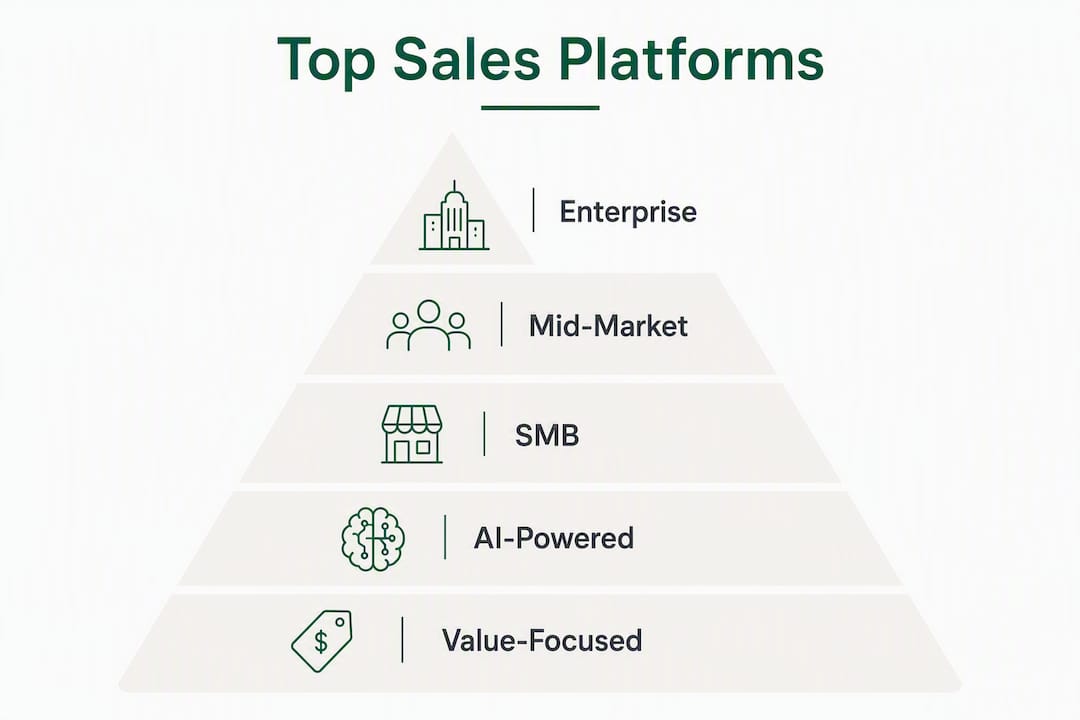
Start with your sales motion, not the feature list. A 5-person founding team running cold outbound has almost nothing in common with a 200-rep enterprise SDR org, and buying the wrong tier of tool is one of the most common and expensive mistakes in this category.
Map your sales motion first
Three questions cut the shortlist in half before you open a single demo:
- Outbound or inbound-assist? Pure outbound teams need sequencing, dialing, and deliverability controls. Inbound-assist teams need CRM-native task management and engagement tracking more than raw sequencing power.
- How many reps? Under 10 reps, a managed service or lightweight tool almost always beats a full enterprise platform on cost and time-to-value. Over 50 reps, you need admin controls, role-based permissions, and governance features that only the enterprise tier provides.
- What is your CRM? If your team lives in Salesforce or HubSpot, a native engagement layer reduces integration lift and gets reps productive faster. The trade-off is less advanced sequencing than a dedicated orchestration platform.
Evaluation criteria that actually matter
Sales engagement software automates and orchestrates outreach across email, calls, and social channels while giving managers visibility into rep actions and customer responses. That definition sounds simple. The gap between platforms shows up in these eight dimensions:
- Channels supported: Email is table stakes. Verify native dialer quality, LinkedIn automation compliance, and SMS availability if your motion uses them.
- CRM and integration depth: Bidirectional sync matters more than one-way logging. Ask whether the tool writes to CRM objects or just appends notes.
- AI features: Personalized email generation, reply-handling workflows, and next-best-action recommendations are measurable uplifts when they draw from high-quality conversation or intent data.
- Deliverability and dedicated sending domains: Deliverability is an operational skill, not just a product feature. Verify dedicated sending domain support, warm-up procedures, and who owns mailbox management day-to-day.
- Analytics and forecasting: Sequence-level conversion rates and step-by-step drop-off data are the minimum. Forecasting and deal health tracking are enterprise-tier additions.
- Security and compliance: SOC 2 Type II, GDPR readiness, and CAN-SPAM/TCPA compliance controls matter for US B2B teams, especially in regulated industries.
- Scalability and customization: Can the platform grow from 5 reps to 50 without a re-implementation? Ask about seat-based vs. volume-based licensing and what triggers a tier upgrade.
- Ease of onboarding: A platform that takes 90 days to configure is a real cost. Ask for the median time-to-first-sequence for a team your size.
Questions to ask vendors during a demo
- How does your tool write activity data back to our CRM — native objects or a third-party connector?
- Who owns the sending domains and mailboxes — us or you? What happens if we churn?
- What warm-up process do you use for new sending domains, and how long before we reach full volume?
- What does the trial or pilot scope include — full feature access or a limited sandbox?
- What is the typical onboarding timeline for a team our size, and is there a dedicated CSM?
- What are your SLAs for support response, and is enterprise support gated behind a higher tier?
- How do you handle deliverability incidents — proactive monitoring or reactive support tickets?
Pro Tip: Before signing any annual contract, run a 30-day pilot focused on two metrics: deliverability rate on new sending domains and reply-to-sequence rate by step. Those two numbers tell you more about real platform performance than any demo.
Typical pricing ranges
Pricing in this category varies widely. Lightweight email tools like Instantly start under $100/month. Mid-market tools like Apollo.io and HubSpot Sales Hub run roughly $50–$150 per seat per month. Enterprise platforms like Outreach, Salesloft, and Gong Engage are typically $100–$200+ per seat per month, often with annual commitments and additional fees for add-ons like dialers or AI features. Managed services like Runleadpilot use volume-based subscription pricing rather than per-seat licensing, which can be significantly cheaper for lean teams that would otherwise need to hire.
Side-by-side comparison of the top sales engagement platforms
The table below covers the dimensions B2B sales leaders use to rule platforms in or out. Pricing bands use a four-tier scale: $ (under $50/seat/month or equivalent), $$ ($50–$100), $$$ ($100–$150), $$$$ ($150+/seat or enterprise-only).
| Platform | Best for | Channels | AI features | CRM & integrations | Deliverability | Analytics | Pricing band | Onboarding |
|---|---|---|---|---|---|---|---|---|
| LeadPilot | Founders, lean teams, agencies | Email (managed) | ICP detection, personalized email gen, reply routing | Native integrations + CRM handoff | Dedicated sending domains, managed warm-up | Campaign-level reporting | $$ | Managed — days, not weeks |
| Outreach | Enterprise outbound | Email, phone, LinkedIn, SMS | AI sequence suggestions, deal health | Salesforce, HubSpot, 100+ | Shared/dedicated domain options | Deep sequence analytics | $$$$ | Complex — weeks to months |
| Salesloft | Mid-market to enterprise | Email, phone, LinkedIn | Coaching AI, cadence analytics | Salesforce, HubSpot, CRM-native | Standard deliverability tools | Revenue intelligence (Clari roadmap) | $$$$ | Moderate — weeks |
| Gong Engage | Conversation-led teams | Email, phone | Conversation-derived personalization, next-best-action | Salesforce, HubSpot, Gong platform | Standard | Pipeline and reply uplift reporting | $$$$ | Moderate |
| Salesforce Sales Cloud | Salesforce-centric orgs | Email, phone, CRM tasks | Einstein AI recommendations | Native Salesforce | Standard | CRM-native forecasting | $$$$ | Moderate to complex |
| HubSpot Sales Hub | HubSpot CRM users | Email, phone, LinkedIn | AI email assist, deal scoring | Native HubSpot | Standard | Marketing-to-sales ROI | $$–$$$ | Fast for HubSpot users |
| Apollo.io | SMB to mid-market | Email, phone, LinkedIn | AI email personalization | Salesforce, HubSpot, native CRM | Standard | Sequence analytics | $$–$$$ | Fast |
| ZoomInfo Sales | Data-driven teams | Email, phone | Intent-signal workflows | Salesforce, HubSpot, Marketo | Standard | Intent and segmentation | $$$$ | Moderate |
| Clari | RevOps / forecasting | Email, CRM-linked | Forecasting AI, deal health | Salesforce, HubSpot | Standard | Revenue forecasting | $$$$ | Moderate to complex |
| Reply.io | High-volume email teams | Email, phone, LinkedIn, SMS | AI email writing, reply detection | Salesforce, HubSpot, Pipedrive | Standard + warm-up tools | Sequence analytics | $$ | Fast |
| Instantly | Large-volume email | Basic AI email | Limited CRM | Multi-account, warm-up | Deliverability dashboard | $ | Very fast | |
| ActiveCampaign | Email-first SMBs | Email, SMS | Segmentation AI | Native CRM, Salesforce | Strong deliverability | Email and CRM analytics | $$–$$$ | Fast |
| Bigin by Zoho CRM | Very small teams | Email, phone | Basic | Zoho ecosystem | Standard | Basic CRM reporting | $ | Very fast |
| FlashIntel | Call-heavy teams | Phone, email | Conversation insights | CRM integrations | Standard | Call analytics | $$ | Fast |
| ClearSlide | Content-forward sales | Email, phone, content | Slide-level engagement analytics | Salesforce, HubSpot | Standard | Content effectiveness analytics | $$–$$$ | Moderate |
| Groove | Salesforce-native teams | Email, phone, meetings | Activity capture AI | Native Salesforce objects | Standard | Salesforce-native reporting | $$–$$$ | Fast for Salesforce users |
| Outplay | Growing SMB/mid-market | Email, phone, LinkedIn, SMS | AI sequence suggestions | Salesforce, HubSpot, Pipedrive | Standard | Multichannel analytics | $$ | Fast |
| Mailshake | Agencies, small teams | Email, phone | AI email writing | Salesforce, HubSpot, Pipedrive | Standard | Campaign analytics | $$ | Very fast |
| Mixmax | Individual sellers | Email (Gmail-native) | AI email assist | Gmail, Salesforce, Slack | Standard | Inbox-level analytics | $–$$ | Very fast |
| Playbooks by Xant | Guided selling teams | Email, phone | Guided cadence AI | Salesforce | Standard | Playbook analytics | $$–$$$ | Moderate |
| VanillaSoft | High-volume calling | Phone, email | Progressive dialing | CRM integrations | Standard | Call and routing analytics | $$ | Fast |
| DealHub | Complex deal workflows | Email, CRM tasks | Guided pricing workflows | Salesforce, HubSpot | Standard | Deal analytics | $$–$$$ | Moderate |
| Clearbit | Enrichment-focused teams | N/A (enrichment layer) | Firmographic enrichment | Salesforce, HubSpot, Marketo | N/A | Enrichment reporting | $$–$$$ | Fast |
| Reply | Multichannel automation | Email, phone, LinkedIn, SMS | AI reply handling | Salesforce, HubSpot, Pipedrive | Standard + warm-up | Sequence analytics | $$ | Fast |
| SmartReach | Email outreach teams | Email, LinkedIn | AI email personalization | Salesforce, HubSpot, Pipedrive | Dedicated domain support | Sequence analytics | $ | Very fast |
| Freshsales | SMB CRM users | Email, phone | AI lead scoring | Native Freshworks | Standard | CRM-native analytics | $$–$$$ | Fast |
| Agentforce Sales | Salesforce AI users | Email, phone, CRM tasks | Autonomous AI agents | Native Salesforce | Standard | Salesforce-native | $$$$ | Moderate to complex |
| CloudTalk | Call-heavy teams | Phone, SMS | Call analytics, AI transcription | Salesforce, HubSpot, Pipedrive | Standard | Call center analytics | $$ | Fast |
| Kaspr | Prospecting/data teams | LinkedIn, email | Contact enrichment | Salesforce, HubSpot | N/A | Prospecting analytics | $–$$ | Very fast |
| RevenueEngage | RevOps-aligned teams | Email, phone | Engagement analytics | CRM integrations | Standard | Revenue analytics | $$–$$$ | Moderate |
G2’s sales engagement category includes Salesforce Sales Cloud, HubSpot Sales Hub, ZoomInfo Sales, Apollo.io, ActiveCampaign, Instantly, Salesloft, Clari, FlashIntel, and Bigin by Zoho CRM among its top-rated solutions, with short best-for labels that align with the positioning above.
The minor vendors — Hotjar, Circle, Brand24, Typeform, and Later — are not purpose-built sales engagement platforms. They serve adjacent functions (behavior analytics, community, social listening, forms, and scheduling) and belong in a broader sales stack conversation rather than a direct SEP comparison.
What does each platform actually offer?
Runleadpilot (LeadPilot)
LeadPilot is not a sequencer you configure. It reads your website, identifies your ideal customer profile, sources and researches matching decision-makers, writes personalized cold emails from real business signals, manages dedicated sending domains and inboxes, runs follow-ups, and routes warm replies to your team. The entire SDR workflow runs without the need to hire an SDR.
That distinction matters for founders and lean teams. Most platforms in this list assume you have reps who will use the tool. LeadPilot assumes you do not, and it handles the execution layer for you. Agencies running outbound for multiple clients get consolidated billing and multi-client workspaces. A free campaign preview lets you see targeting, sample emails, and expected reply volume before committing.
Verify in the demo: ICP detection accuracy against your actual customer base, sample email quality for your specific product, and how warm replies are routed to your team.
For a deeper look at how the managed AI SDR workflow compares to self-serve tools, the AI SDR tools guide covers the category in detail.
Outreach
The enterprise benchmark for outbound sequencing. Outreach offers deep cadence orchestration, granular admin controls, role-based permissions, and a reporting layer that lets revenue ops teams diagnose exactly where sequences break down. The platform supports email, phone, LinkedIn, and SMS natively.

The complexity is real. Outreach implementations at large organizations often require a substantial configuration period. For teams with a dedicated RevOps function and 50+ reps, that investment pays off. For anyone smaller, it is usually overkill.
Pros: Best-in-class sequencing depth, strong admin controls, extensive integrations. Cons: High cost, long implementation, steep learning curve for reps.
For a direct comparison of Outreach and Salesloft, including merger-related roadmap considerations, see the Outreach vs Salesloft breakdown.
Salesloft
Salesloft competes directly with Outreach at the mid-market and enterprise level, with a stronger emphasis on rep coaching and cadence governance. The Clari and Salesloft merger creates an AI company positioning itself as a predictive revenue system, combining engagement with forecasting. That roadmap is compelling on paper, but buyers should verify integration timelines and pricing changes before committing to a multi-year deal.
Pros: Strong coaching workflows, solid cadence management, revenue intelligence roadmap. Cons: Merger-related roadmap uncertainty, enterprise pricing, complexity for small teams.
If you are re-evaluating Salesloft after the merger, the Salesloft alternatives guide covers the main options.
Gong Engage
Gong Engage personalizes outreach from recorded conversation data. Rather than writing email templates from scratch, reps get AI-generated messages informed by what prospects actually said in previous calls. Gong reports a 34% higher response rate for Engage users, with documented pipeline increases for enterprise customers. That is a vendor claim, but the underlying logic is sound: personalization drawn from real conversation context outperforms generic templates.
Pros: Conversation-derived personalization, strong AI next-best-action, measurable reply uplift. Cons: Requires Gong conversation intelligence investment, enterprise pricing, less useful without call data.
Salesforce Sales Cloud (Sales Engagement)
Salesforce’s engagement layer centralizes tasks, automates follow-ups, captures call insights, and surfaces Einstein AI recommendations for next-best actions, all inside the Salesforce CRM. For organizations where Salesforce is the system of record, this is the lowest-friction path to engagement tooling. The trade-off is that Salesforce’s native sequencing is less advanced than Outreach or Salesloft, and customization requires Salesforce admin resources.
Pros: Native CRM integration, no additional sync required, Einstein AI built in. Cons: Less advanced sequencing, requires Salesforce admin for customization, expensive at scale.
Agentforce Sales, Salesforce’s autonomous AI agent layer, extends this with agentic workflows for teams on the Einstein platform.
HubSpot Sales Hub
The natural choice if your team already runs HubSpot CRM. Sales Hub adds sequences, calling, meeting scheduling, and deal tracking without leaving the HubSpot ecosystem. Marketing-to-sales attribution is built in, which matters for teams that run inbound and outbound in parallel. Sequencing depth is lighter than Outreach or Salesloft, but for most SMB and mid-market teams, it is sufficient.
Pros: Unified CRM and engagement, fast implementation for HubSpot users, marketing ROI visibility. Cons: Lighter sequencing than enterprise tools, costs scale quickly with contacts and features.
Apollo.io
Apollo pairs a large contact database with built-in sequencing, making it the strongest value proposition for SMBs that would otherwise pay separately for a data tool and an engagement tool. Category analysis consistently positions Apollo as the best-value choice for SMBs, and the pricing reflects that. The database quality and sequencing depth are both solid, though neither is best-in-class on its own.

Pros: Data + engagement in one platform, strong value for SMBs, fast setup. Cons: Database coverage gaps in some verticals, sequencing less advanced than enterprise tools.
For buyers comparing Apollo to managed alternatives, the Apollo alternatives guide covers the key differences.
ZoomInfo Sales
ZoomInfo leads on contact database depth and intent signal quality. The platform is best for data-driven teams that need extensive firmographic and technographic data to feed their engagement workflows. Pricing is enterprise-tier, and the value proposition depends heavily on how much your team uses the data layer.
Pros: Industry-leading contact database, strong intent signals, deep integrations. Cons: Expensive, data-heavy interface, overkill for teams that do not need the full database.
Clari
Clari’s core strength is revenue forecasting and deal health tracking. The Salesloft merger adds engagement capabilities to that foundation, but the primary buyer is a RevOps leader who wants AI-powered forecasting, not a sales rep who wants a sequencer. Gartner Peer Insights covers Clari under the Revenue Action Orchestration category, reflecting this positioning shift.
Pros: Best-in-class forecasting, strong deal health AI, growing engagement capabilities. Cons: Engagement features still maturing post-merger, complex implementation, enterprise pricing.
Reply.io
Reply.io focuses on high-volume email sequencing with multichannel touches. It supports email, phone, LinkedIn, and SMS, with AI email writing and reply detection built in. Pricing is accessible for SMBs, and the platform is faster to set up than enterprise tools. For teams that need volume and simplicity, it is a strong option. For a comparison of alternatives, the Reply.io alternatives guide is worth reviewing.
Instantly
Instantly is built for teams running large-volume email campaigns across multiple sending accounts. The platform’s strength is deliverability management and multi-account warm-up, not deep sequencing or CRM integration. At its price point, it is hard to beat for pure email volume.
ActiveCampaign
ActiveCampaign combines email automation with a lightweight CRM, making it a practical choice for SMBs that want segmentation and deliverability without paying for a full SEP. It is not a purpose-built sales engagement tool, but for email-first outbound with CRM features, it covers the basics well.
Bigin by Zoho CRM
Bigin is Zoho’s entry-level CRM with basic engagement features. The value is affordability and simplicity for very small teams. It is not a serious competitor to the platforms above on features, but for a 2–3 person team that needs a starting point, it works.
FlashIntel
FlashIntel focuses on dialing and call-scheduling automation with conversation insights. Teams that run high-volume calling workflows and need callback automation will find it useful. Less relevant for email-first or multichannel teams.
ClearSlide
ClearSlide takes a content-centered approach to sales engagement, with slide-level analytics that show exactly which slides prospects engaged with and for how long. CRM auto-logging means reps do not need to manually record content interactions. For sales teams where presentations drive the buying process, that analytics layer is genuinely useful.
Groove
Groove writes email, call, and meeting data directly into Salesforce objects rather than a separate database. For Salesforce-heavy organizations that need strict CRM-native activity capture, that is a meaningful advantage over tools that sync data through a connector.
Outplay
Outplay offers multichannel cadence orchestration at SMB-friendly pricing. It supports email, phone, LinkedIn, and SMS, with sequence analytics and CRM integrations. A practical choice for growing teams that want multichannel coverage without enterprise cost.
Mailshake
Mailshake is built for agencies and small teams running email campaigns at scale. Agency-friendly features, simple setup, and solid email automation make it a go-to for outbound agencies that do not need deep CRM integration.
Mixmax
Mixmax embeds sales engagement features directly in Gmail, making it the fastest path to productivity for individual sellers who live in their inbox. Scheduling, tracking, sequences, and templates all run inside Gmail without switching tools.
Playbooks by Xant
Playbooks focuses on guided selling with prescriptive cadences. Reps follow structured playbooks rather than building their own sequences, which reduces variability in outreach quality. Best for teams that want to standardize rep behavior.
VanillaSoft
VanillaSoft is a dialing-first platform with progressive dialing and lead routing for high-volume inside sales teams. If your team’s primary motion is phone-based, VanillaSoft’s routing and dialing automation are purpose-built for that workflow.
DealHub
DealHub pairs CPQ-style deal configuration with guided selling workflows. It is less a traditional SEP and more a deal orchestration tool for complex sales with configuration and pricing complexity.
Clearbit (now part of HubSpot)
Clearbit provides contact and firmographic enrichment that feeds engagement workflows. It is not a standalone SEP but a data layer that improves targeting precision for teams using other platforms. For alternatives, the Clearbit alternatives guide covers the main options.
Kaspr
Kaspr is a LinkedIn-focused prospecting tool that extracts contact data for outreach. It is a prospecting data tool, not a full engagement platform, and works best as a feed into a primary SEP.
SmartReach
SmartReach focuses on email outreach with dedicated domain support and LinkedIn automation. It is a lightweight, affordable option for teams that prioritize deliverability and do not need deep CRM integration.
Freshsales
Freshsales is Freshworks’ CRM with built-in engagement features including email, phone, and AI lead scoring. A practical choice for SMBs already in the Freshworks ecosystem.
CloudTalk
CloudTalk is a cloud-based call center and dialing platform with AI transcription and CRM integrations. Best for teams that need a dedicated calling solution rather than a full SEP.
RevenueEngage
RevenueEngage is a RevOps-aligned engagement tool focused on engagement analytics and revenue attribution. It suits organizations that need to tie engagement activity directly to revenue outcomes.
How we evaluated and selected these platforms
The evaluation behind this shortlist drew on G2’s sales engagement category ratings and best-for labels, vendor documentation, published case studies, and Gartner Peer Insights coverage of the Revenue Action Orchestration category. The research cutoff is mid-2026.
Evaluation criteria and weighting:
- Feature depth and channel coverage (high weight)
- CRM and integration quality (high weight)
- AI capabilities and measurable outcomes (high weight)
- Deliverability controls and dedicated domain support (high weight)
- Third-party ratings from G2 and Gartner Peer Insights (medium weight)
- Pricing transparency and licensing model clarity (medium weight)
- Onboarding support and time-to-value (medium weight)
- Security and compliance features for US B2B teams (medium weight)
Sources used: G2 category pages and roundups, vendor documentation (Salesforce, Gong, ClearSlide, Outreach, Salesloft), Gartner Peer Insights, and published market commentary on the Clari/Salesloft merger and category consolidation.
Market consolidation is an active risk in this category. The Clari and Salesloft merger is the most visible example, but M&A activity across sales tech has been accelerating. Buyers should ask every vendor for a 12-month product roadmap and confirm whether pricing or integration timelines are affected by recent or pending acquisitions. A platform that looks ideal today can shift significantly after a merger closes.
A note on market fluidity: vendor roadmaps, pricing, and integration depth change faster in this category than in most. Re-validate vendor fit every 12–18 months, particularly for platforms involved in recent acquisitions.
When does a managed AI outbound approach beat a self-serve platform?
Most of this article compares self-serve platforms that your team configures and operates. Runleadpilot (LeadPilot) is a different model, and it is worth being direct about when that model wins.
LeadPilot handles the full SDR workflow: ICP detection from your website, decision-maker sourcing and research, personalized cold email writing from real business signals, dedicated sending domain management, inbox warm-up, follow-up automation, and warm reply routing to your team. You do not configure sequences. You do not manage mailboxes. You do not write templates.
When the managed approach is the right call:
- You are a founder or a team of under 20 people with no dedicated SDR.
- You need outbound results in weeks, not the 60–90 days a full platform implementation takes.
- You are an agency running outbound for multiple clients and need consolidated billing and multi-client workspaces.
- You want to validate outbound as a channel before committing to a full platform and headcount.
When a self-serve platform makes more sense:
- You have a dedicated RevOps or sales enablement function that can configure and maintain the tool.
- You need deep customization, rep-level coaching analytics, or tight CRM governance.
- You are running account-based selling with complex multi-threaded sequences that require human judgment at each step.
Pro Tip: Start with a free campaign preview from LeadPilot before you commit to any platform. The preview shows your ICP detection, sample outreach emails, and expected reply volume. It costs nothing and gives you a baseline to compare against any platform demo you run.
A placeholder for a customer case study belongs here:.
For a deeper look at the AI SDR software category and how managed outbound compares to self-serve tools, the LeadPilot product page covers the full workflow.
Key Takeaways
The strongest sales engagement platforms in 2026 pair AI-driven personalization with deep CRM integration, but for founders and lean teams, a managed AI SDR like Runleadpilot delivers faster results without the implementation overhead.
| Point | Details |
|---|---|
| Match the tool to your team size | Enterprise platforms like Outreach and Salesloft require RevOps investment; lean teams get faster results from managed or lightweight tools. |
| CRM fit cuts implementation time | Native engagement layers in Salesforce and HubSpot reduce integration lift but offer less advanced sequencing than dedicated platforms. |
| AI features need quality data | Personalization and next-best-action AI deliver measurable uplifts only when they draw from real conversation or intent data. |
| Validate deliverability in the pilot | Dedicated sending domain support and warm-up procedures are operational requirements, not just product checkboxes. |
| Runleadpilot for lean teams and agencies | LeadPilot handles the full SDR workflow managed, with a free campaign preview before any commitment. |
The real problem with how most teams buy sales engagement software
The conventional wisdom says: evaluate features, check G2 ratings, run a demo, pick the highest-rated tool your budget allows. That process sounds reasonable. It is also how most teams end up with a platform they underuse for 18 months before switching.
The category has a structural problem that the feature comparisons do not surface. Most sales engagement platforms are built for teams that already know how to run outbound. They assume you have reps who understand sequencing, managers who can interpret analytics, and a RevOps function that can configure and maintain the tool. The platform is a force multiplier for an existing motion. It is not a motion itself.
That assumption breaks down for a huge portion of the market: founders who have never run outbound at scale, lean sales teams where the AE is also the SDR, and agencies that need to spin up outbound for clients without building internal expertise from scratch. For those buyers, the right question is not “which platform has the best sequencing?” It is “who is going to run this?”
The Clari and Salesloft merger is a useful signal here. The direction the category is moving is toward revenue intelligence and AI-driven execution, not just better sequence builders. That is the right direction. But the gap between what these platforms promise and what a 10-person team can actually implement and maintain is wider than any G2 rating captures.
My honest view: if you have fewer than 20 people in your go-to-market motion and no dedicated RevOps, start with a managed approach. Validate the channel, learn what messaging works, and build the case for a full platform investment from real data. Buying Outreach before you have proven outbound works is a common and expensive mistake.
What you actually get with a LeadPilot campaign preview
Every platform in this list offers a demo. Runleadpilot offers something more useful: a free campaign preview that shows you exactly what managed outbound looks like for your specific business before you spend anything.
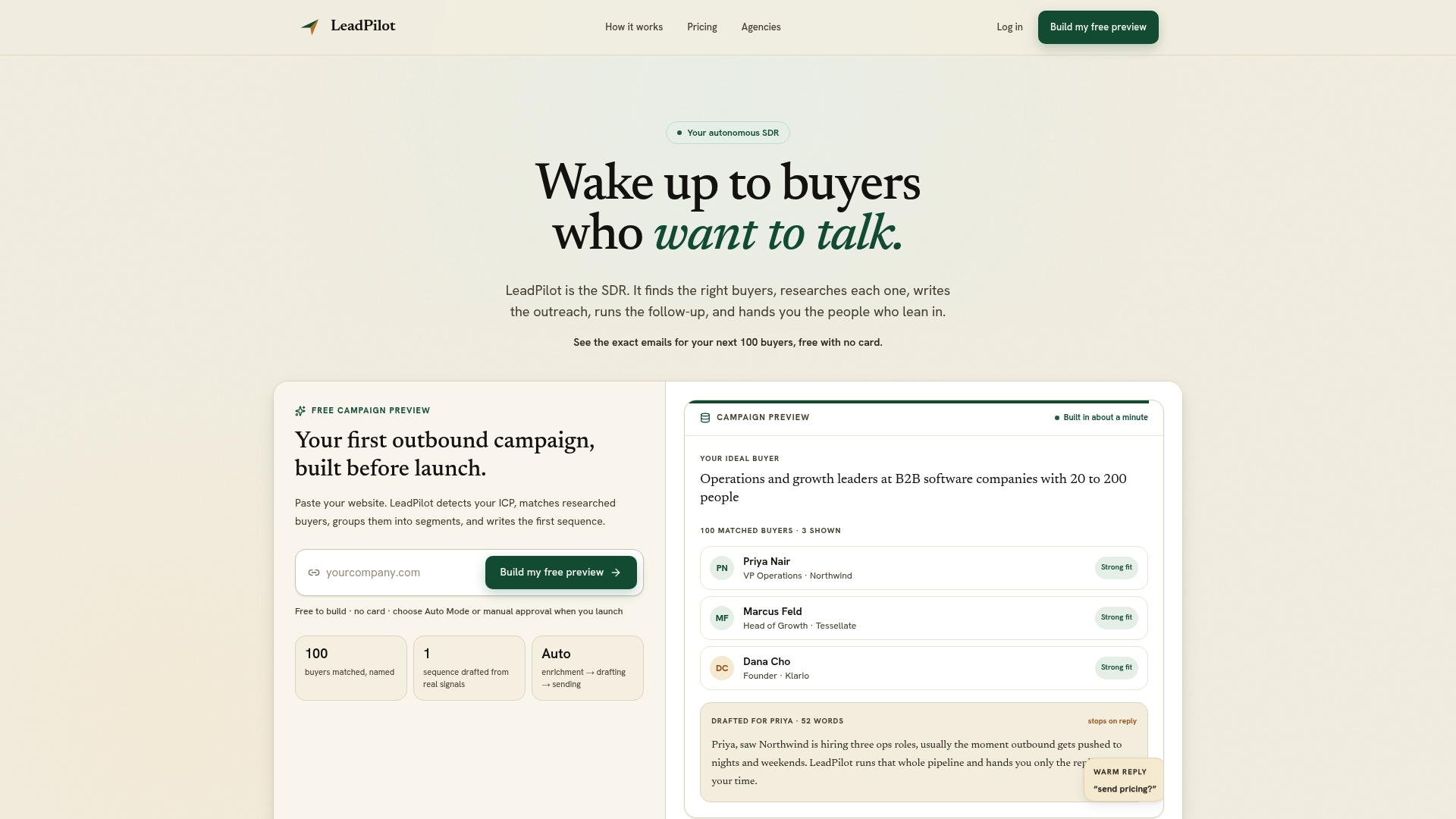
The preview includes ICP detection from your website, a sample set of researched decision-makers that match your ideal customer profile, personalized cold email drafts written from real business signals, a deliverability check on sending domain setup, and a projection of expected reply volume based on your target segment. You see the actual output, not a generic walkthrough.
From there, LeadPilot’s managed onboarding takes days, not weeks. Dedicated sending domains are set up and warmed. Sequences run. Warm replies route to your team for follow-up. Agencies can run multiple client campaigns from a single workspace with consolidated billing.
If you are a founder, a lean sales team, or an agency that needs outbound results without the overhead of a full platform implementation, start with the free campaign preview and see what the managed AI SDR workflow produces for your pipeline.
Sources and further reading
- Best sales engagement software | G2 Learn
- Sales engagement software category | G2
- Best Sales Engagement Platforms 2026: a Verdict | Supered
- AI Sales Engagement Software | Gong Engage
- Best Sales Engagement Platform | Sales Cloud | Salesforce
- The #1 Sales Engagement Platform | ClearSlide
- Best Revenue Action Orchestration Reviews 2026 | Gartner Peer Insights
- Sales Engagement Applications | Gartner Peer Insights
- Sales pipeline management guide | Dialed Sales
- Sales pipeline visibility explained | Dialed Sales
- Outreach vs Salesloft comparison | LeadPilot blog
- Best AI SDR tools for B2B sales teams | LeadPilot blog
- Best sales prospecting tools | LeadPilot blog
Research cutoff: mid-2026. The Clari/Salesloft merger and related roadmap changes are the most significant market events referenced. Verify current pricing, integration status, and roadmap commitments directly with vendors before finalizing any procurement decision.